Lately, the refrain in my head has been: Later… I will get out of bed later. I will send that email later. I will work on my taxes later. I will plan the things later…
And then, layered in, the quiet voice of spring begins to tell me that the time to begin is now. That no one will do it for me. That there is no better time than the present. And so, the pull of the deep yin of winter and the push of the loud yang of spring begin their wrestling match. This is always the way around spring equinox for me, and my body feels it too. There is tension and a very strong feeling of, “it can’t be time to get out of bed yet.” And by bed, I mean the deep hibernation I have been in all winter.
I’ve been working, but quietly. I’ve been tending friendships, but haven’t left the house all that much. I have walked in the silent snowy woods most days over the past six months (yes, it has snowed for almost that long), talking to the trees and sharing my learnings with them. I have turned and turned around the same bends in the path, integrating the things I’ve been learning. And consistently, through fall and winter, I have held ceremony.
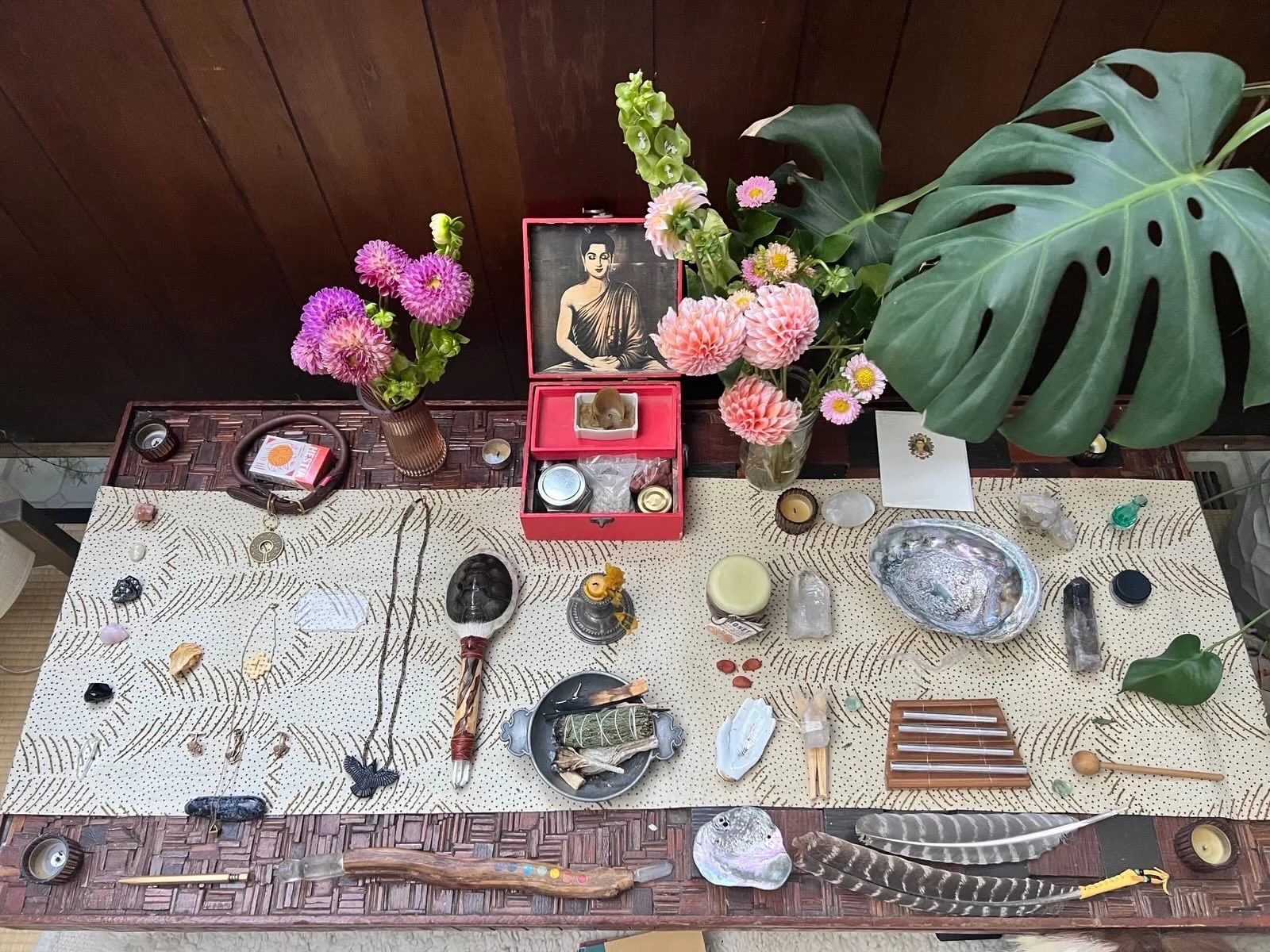
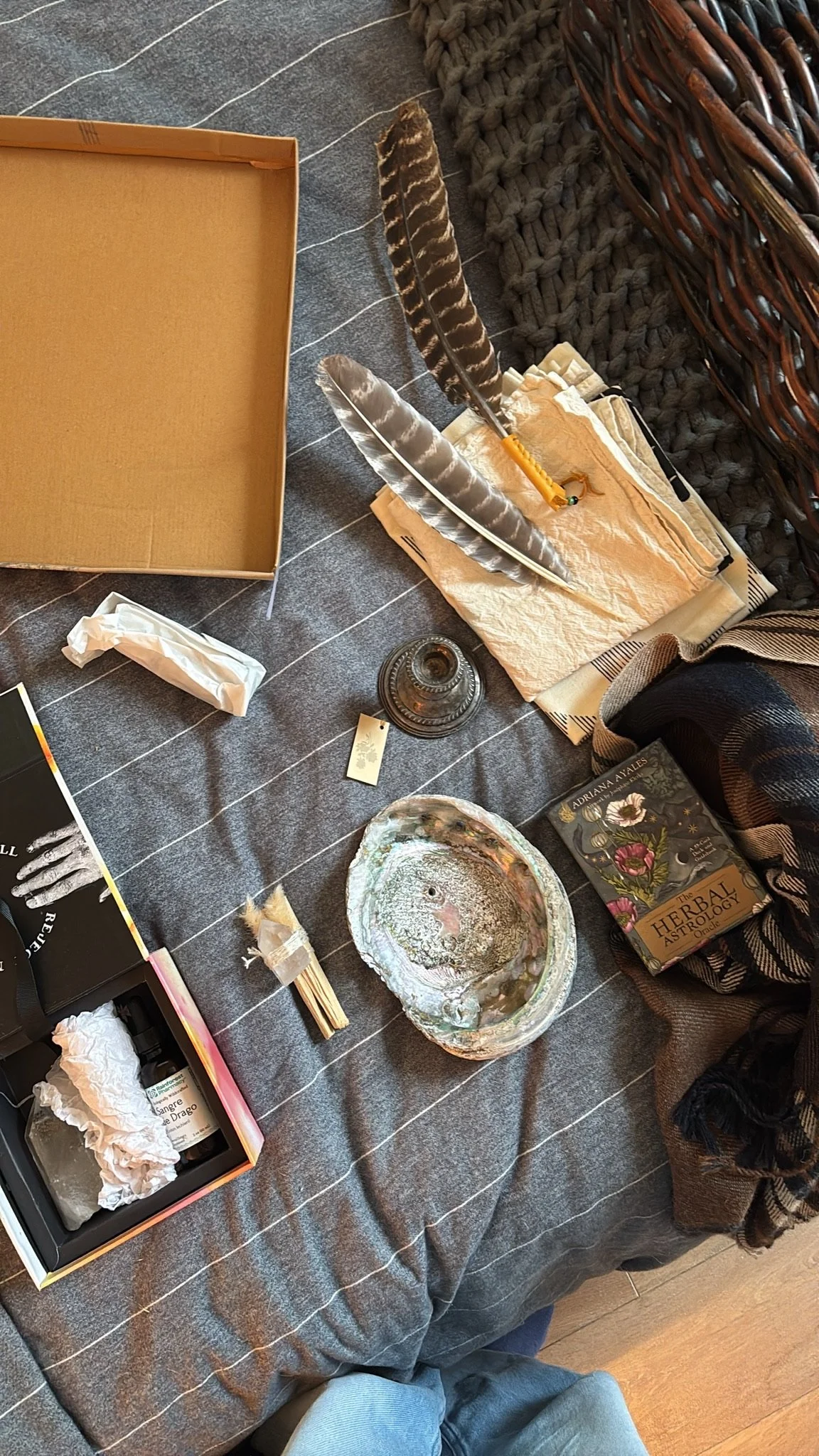
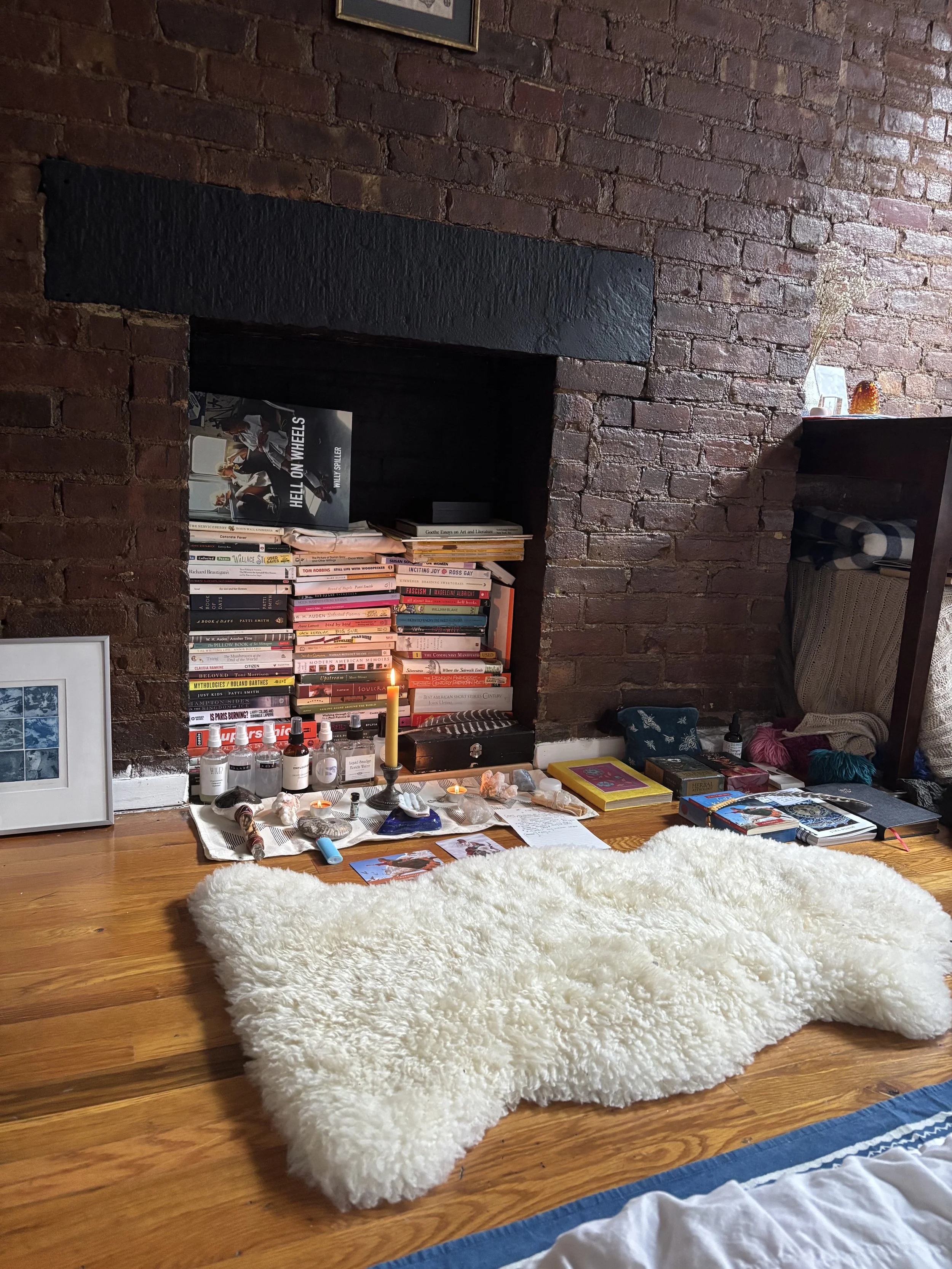
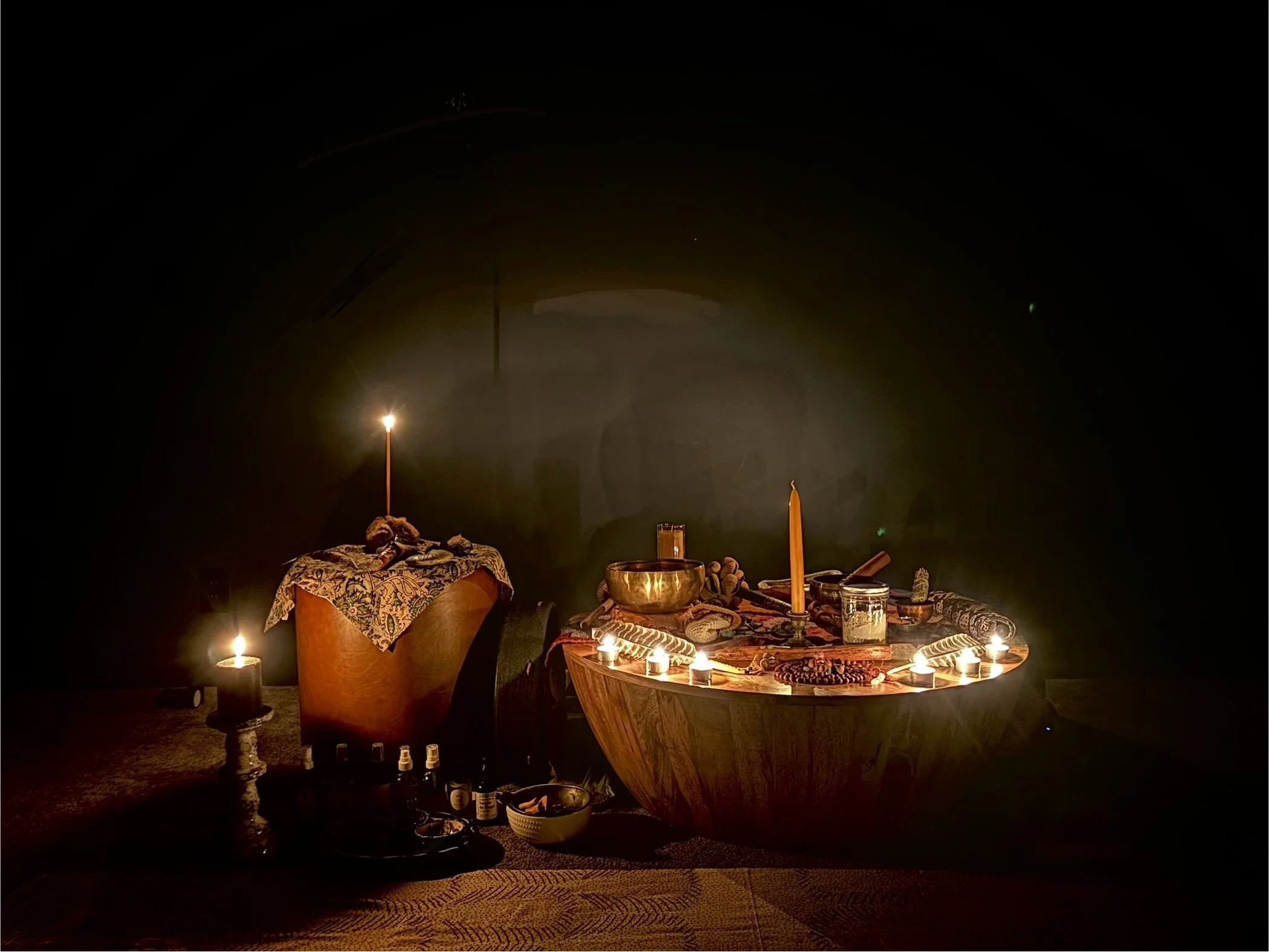
The path to becoming a ceremonial minister has been a long and winding one. It began in 2020, when on my way to moving indefinitely to Northern California I stopped in the Anza-Borrego desert to participate in a vision quest through Bill Plotkin’s Animas Valley Institute. I had been reading Plotkin’s Nature and the Human Soul for a mindfulness teacher training that I was in, and I completely fell in love with his vision of and for the world. I decided to take the deep dive into the initiation that was beloved to him and to indigenous cultures across the earth: fasting alone in the desert for multiple days. The Sioux term Hanbleceya translates to "crying for a dream," and this is the quest: in our naked vulnerability, stripped of most safety and comfort, we pray for a vision for our lives. As Plotkin explains, this can be the simplest image — it is a symbol that will continue to reveal itself to us throughout our lives.
Leading into the quest, I began to dream of spiders. On my first night in the desert, with our full questing group (we were together for 6 days before heading into our solo fasts), I dreamed of friendly, twin black widows. And so one of my instructions from the facilitators was to walk with the intention of weaving; to walk as spider.
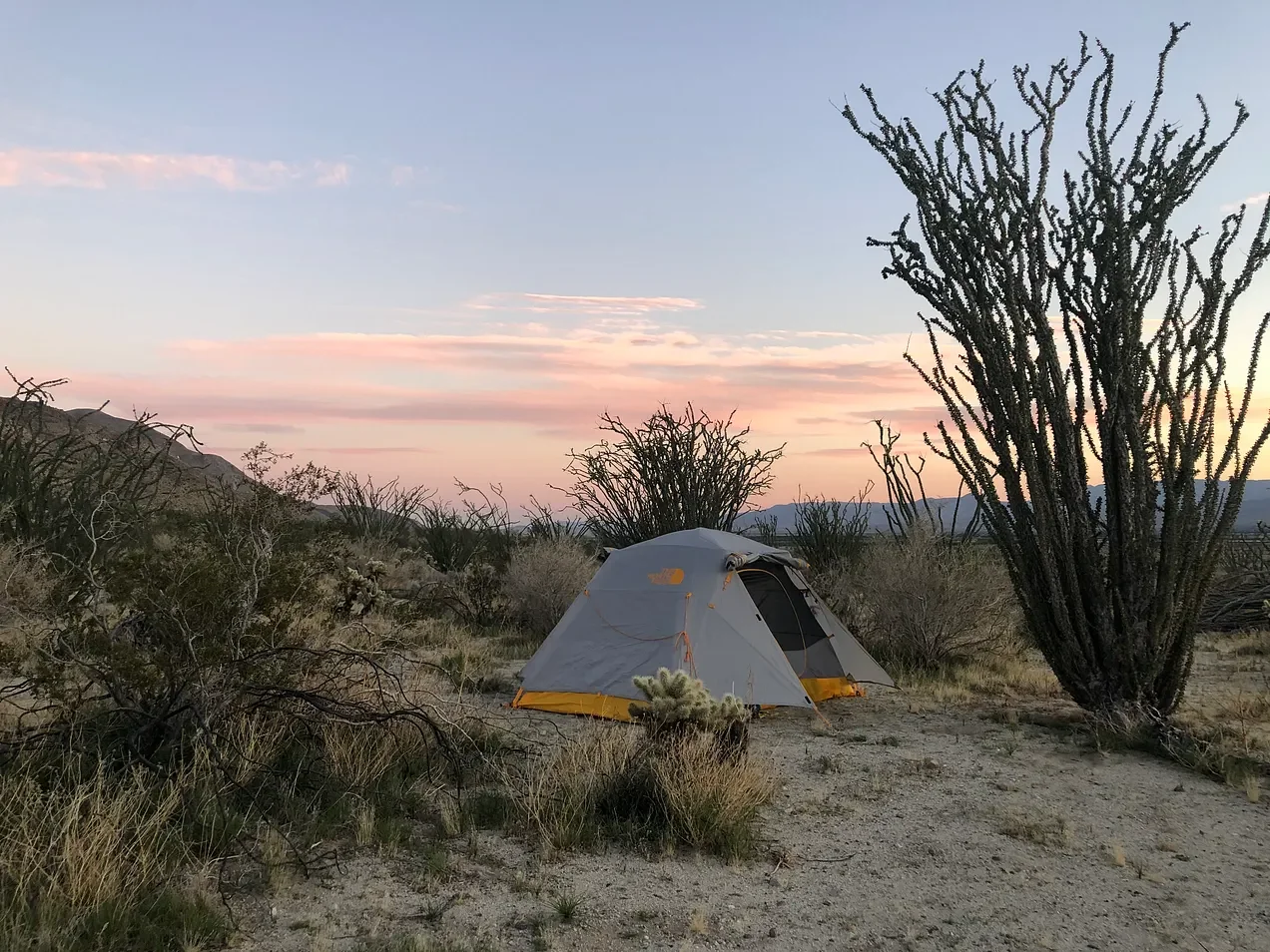
my tent, in the Anza-Borrego desert on the first day of vision fast prep
The quest began. I struggled, more with being alone than with not eating. I looked forward to the part of the day when I walked to the small circle of stones that my quest buddy and I had made to signal to each other that we were safe, alive, and not lost: in the morning, he left one stone in the center; in the afternoon, I checked for his stone and left mine — the only communication we had for the entire four days. I cried and cried to the canyon about how lonely I was; I cried out to the earth mother for comfort; and I nursed the wounds of loneliness and abandonment that I’ve inherited from my ancestors.
By the third day, the mourning had quieted down. I had settled into the stillness that comes when the body has no energy input aside from sun and water: the stillness and harmony that plants feel as they photosynthesize. I mostly crawled places. My vibrational energy became so slow that hummingbirds came to float in front of my face and say hello to me. I talked to the flowers and the stones. And I went to sit on a boulder by the little stream below my camp. There, I slowly wove something like a tiny dreamcatcher out of sticks and fibers I pulled from nearby palm leaves. I let myself pour all of my life force into this creation, and it became the inspiration for the spirit name I walked out of the desert with: Dream Weaver.
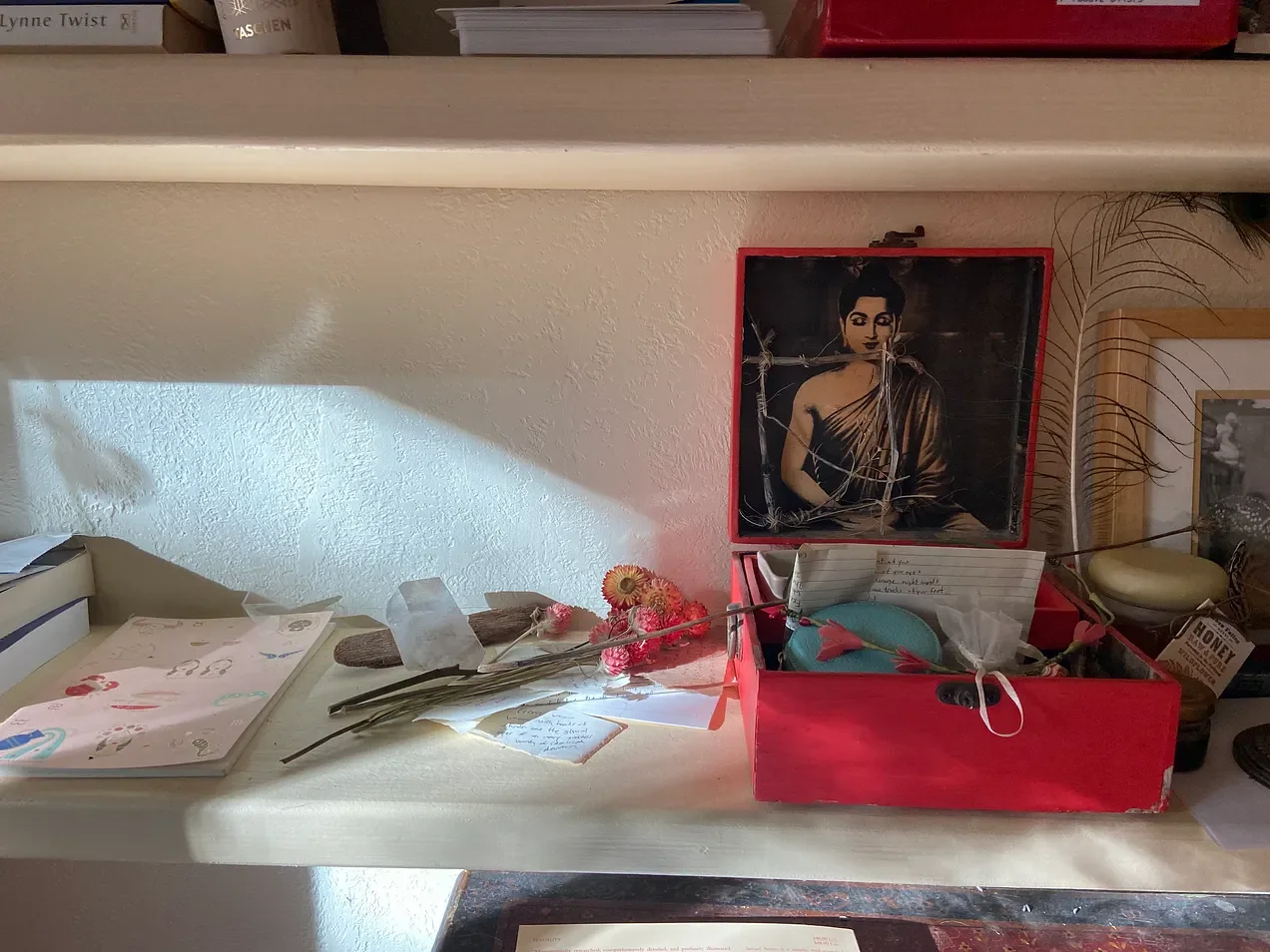
you can see my little dream weave sitting in front of the Buddha here
On the last night of our quest, we were instructed to tend a fire all night and to pray for our vision, if it hadn’t come. I tended my fire and I prayed, and at some point I fell asleep, and a vision did not come to me in the way that I had expected it to: I did not receive a clear instruction, or a dream, or a clear symbol burning in my mind’s eye. But it dawned on me, as I was walking out of the canyon back to base camp the next day, that something had come. There was the dream weaving symbol, first, which I would come to find much significance in (and still do). And there was something else: throughout the entirety of my quest, a movie scene I had long forgotten had been playing over and over in my mind. It was a dance scene from the movie version of the musical Oklahoma!, where Shirley Jones’ character, forced to make a difficult decision, inhales from a special bottle of smelling salts a peddlar friend has sold to her. She immediately enters a lucid dream-state where she encounters her shadow self; an elaborate and colorful dream-dance scene unfolds, from which she wakes up with a clarity she did not have before.
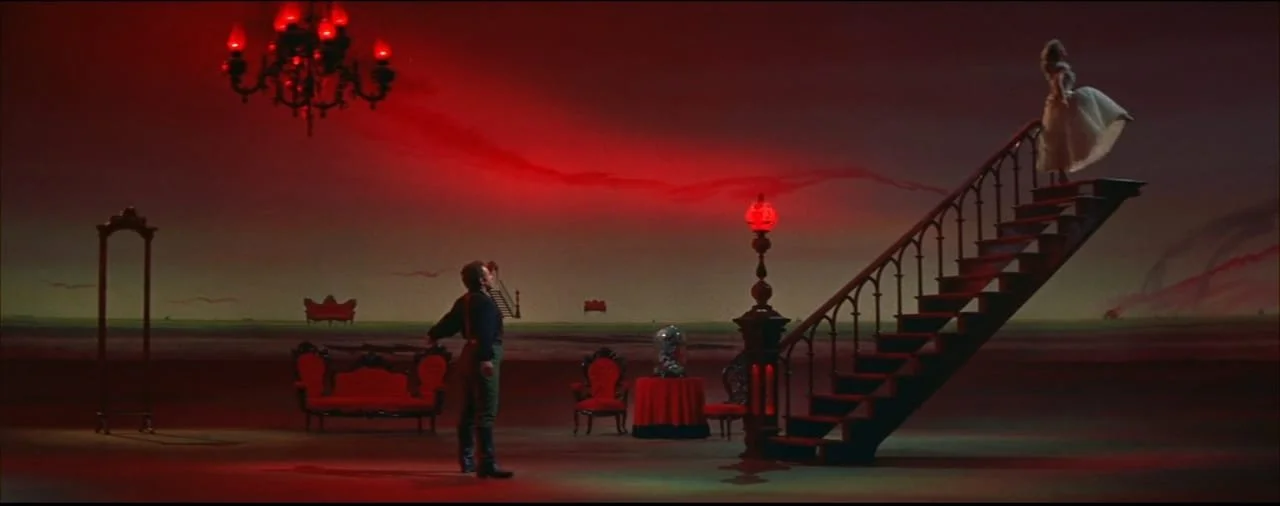
still from Oklahoma! (1955) - the Dream Ballet scene
As I sat with this dream-vision within my own vision on the quest, I reached a clear understanding: I was meant to hold space for people in expanded states. This was before I had any idea that a thriving underground community of psychedelic guides existed (specifically, in California, where I had just moved). Michael Pollan’s How to Change Your Mind had come out two years earlier and I had been interested, but had had no vision of myself, yet, as a healer. I had had a life-altering mushroom journey while studying abroad in college that had deepened the spiritual path I was already on, but I had continued to follow my ego’s agenda of living in New York City and becoming a writer of some kind. But something had told me to leave that behind, and California would soon reveal to me the path that my vision quest had initiated.
I spent three years in California studying somatic therapy and herbalism and participating in 1:1 and group ceremonies. As soon as I had experienced my first 1:1 ceremonial experience, it was even more clear to me that holding ceremony was the work that I wanted to do in the world. I wanted to usher people through the altered dream states that would bring them deeper clarity and alignment and change their lives. I wanted to help people to feel the emotions they had been running away from for years. I wanted to help people grieve, the way I had grieved my first heartbreak the first time I took mushrooms as a 20-year-old. I wanted to help people laugh the way I had laughed once that grieving was over. I wanted to help people remember themselves, their deepest soul selves, to connect to the essence they remembered from when they were children. I wanted to midwife people’s most sacred visions. I wanted to help people know that magic is real, that joy is within reach, that there is really so little to worry about. That connection with others is the most important thing to strive for; that the rest will follow. That we are not our fear, our depression, our anxiety. That we are love, at our core.
My winding path to this work involved leaving it, for a while. The community of ceremonialists that I had wanted to train with dissolved just as I was getting ready to apply for training; and I realize now that I wasn’t ready then. I had more training to do in other modalities; but more importantly, I had more living and heartbreak to do. What I have realized is that we can only hold others as deeply as we have had to hold ourselves, and I almost broke last year. The trials of my Saturn Return — the riddle it presented to me around love, commitment, and identity — led to the deepest grief I had experienced. I grieved for love lost, but mostly — I realize now — for a version of myself that I could not continue to walk as.
A few years ago, I traveled into the mountains of Oaxaca, Mexico, where the Mazatec people live. This culture has been in relationship with magic mushrooms for thousands of years, and their culture is a reflection of this: their entire cosmology and understanding of reality is animistic. They do not live in the same paradigm as western society; though they have been forced to reckon with it since the late 1950s, when R. Gordon Wasson traveled to the Oaxacan mountains and journeyed with the now-famous Maria Sabina, wrote about it in Life Magazine, and unintentionally invited an onslaught of unwelcome Westerners into that world (including, might I name, me).
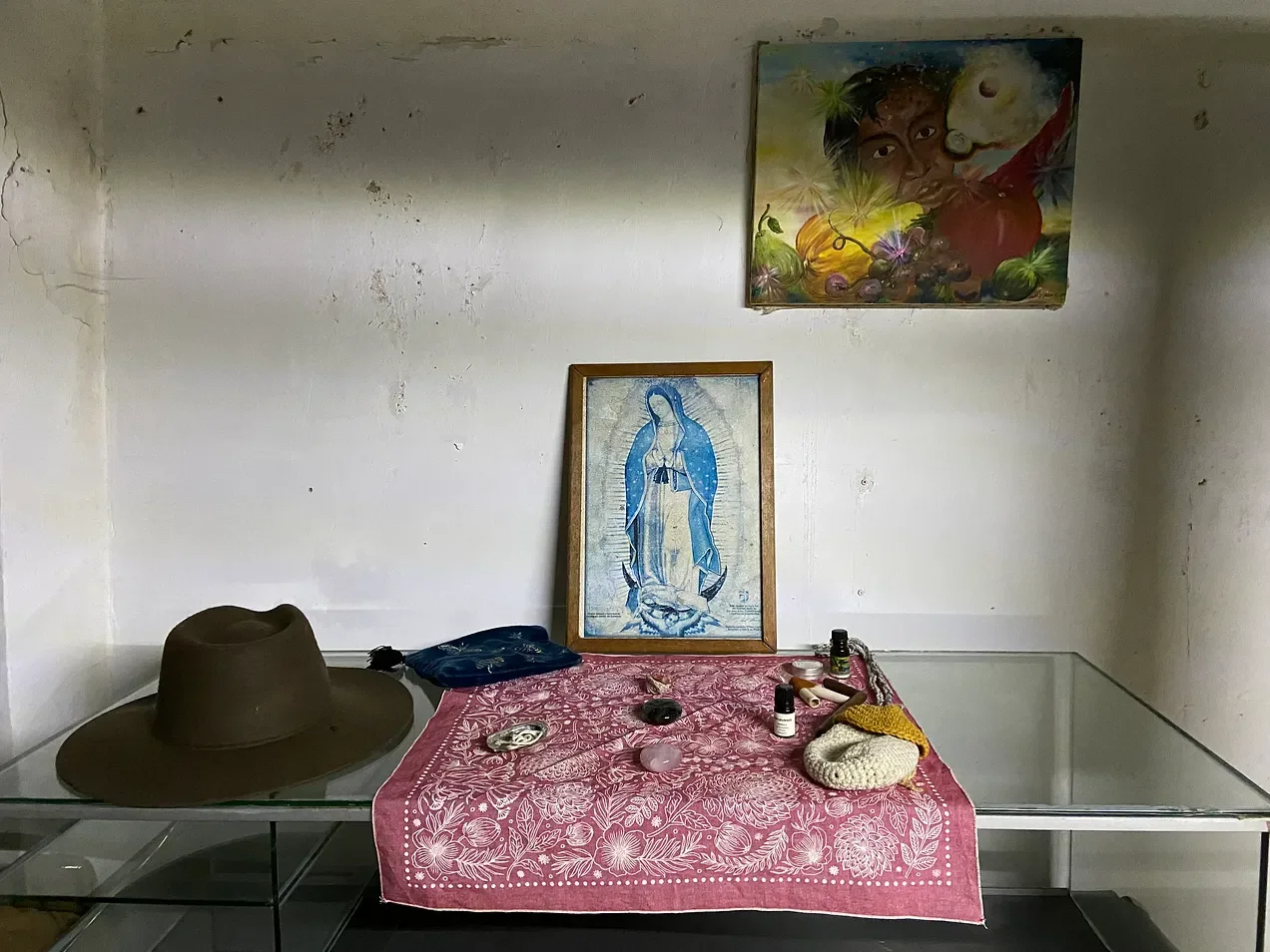
an altar I made on that trip, in Oaxaca
While there, I met a Mazatec healer who told me that if I wanted to do the work of holding ceremony, I had to give up my vision of family life. I had to decide, instead, to marry the medicine I would carry. At the time, I was entering a new relationship and was tenderly holding just the vision she threatened — of marriage, of family. I dismissed what she had said (in Mazatec, translated into Spanish for me), noting that she herself had a family. But I think, now, that I know what she meant: while I still hope to, maybe, be a mother someday, there is an unwritten contract in this work. My primary relationship, for some time, has been with the medicine I am learning to carry. It must continue to be. And when such a strong channel for spiritual guidance is online, the desires of the ego lose the battle.
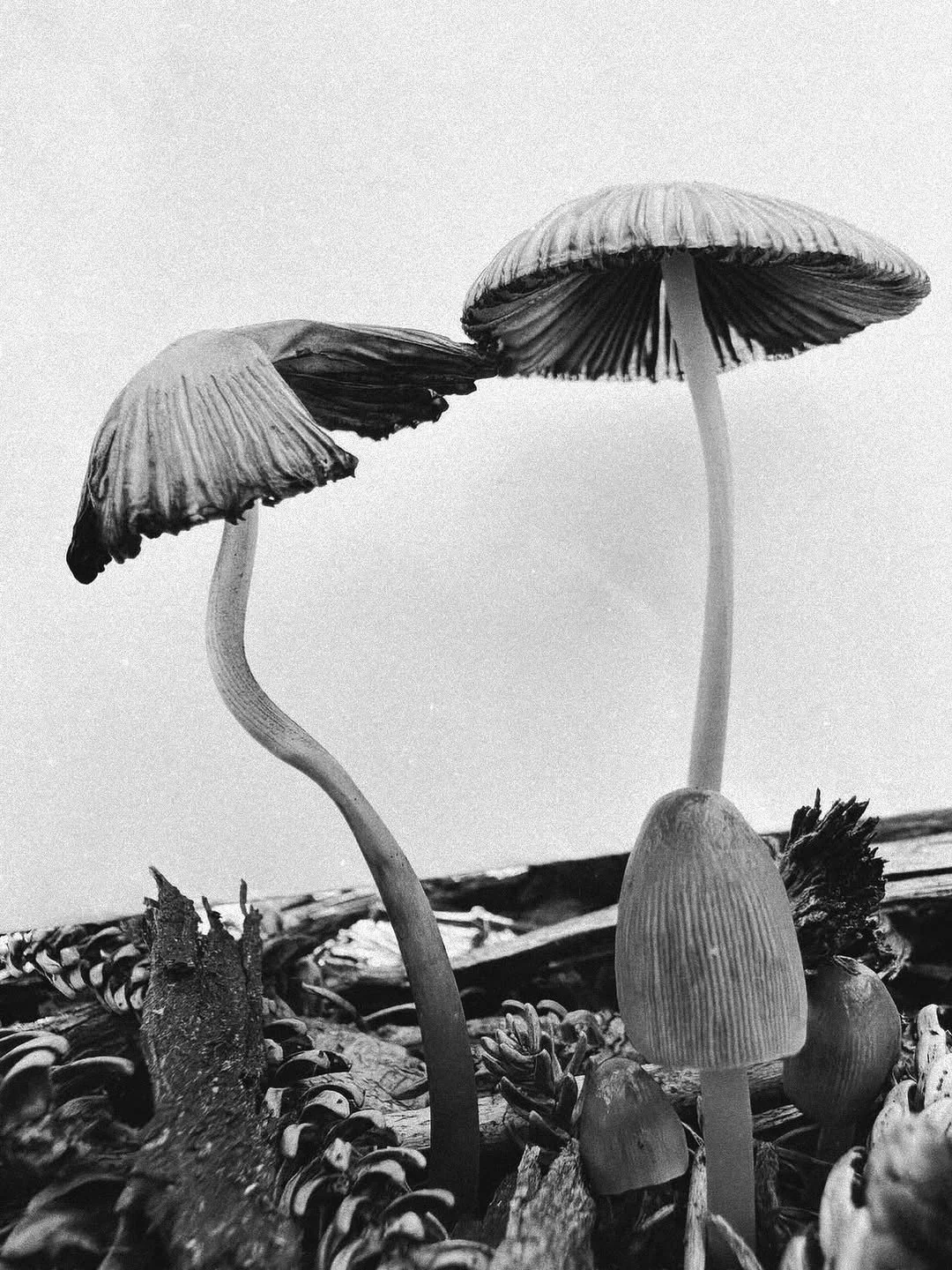
image sourced via Cosmos
And so, I am a medicine woman. I have known this part of me for a long time. I have been tending to her over the last five years, finding teachers and mentors to help me remember the ancient healing ways of my ancestors. And two years ago, I joined a cohort of people on the same path, training to become ceremonial ministers. We are united in our vision for a better world, for helping people to awaken to their highest truth so that we can all come into alignment with the earth and the cosmos. So that we can each find our sacred part to play, like bees in a beehive. So that we can become, as Bill Plotkin puts it, a soul-centric society once more, and live in balance with our sacred resources.
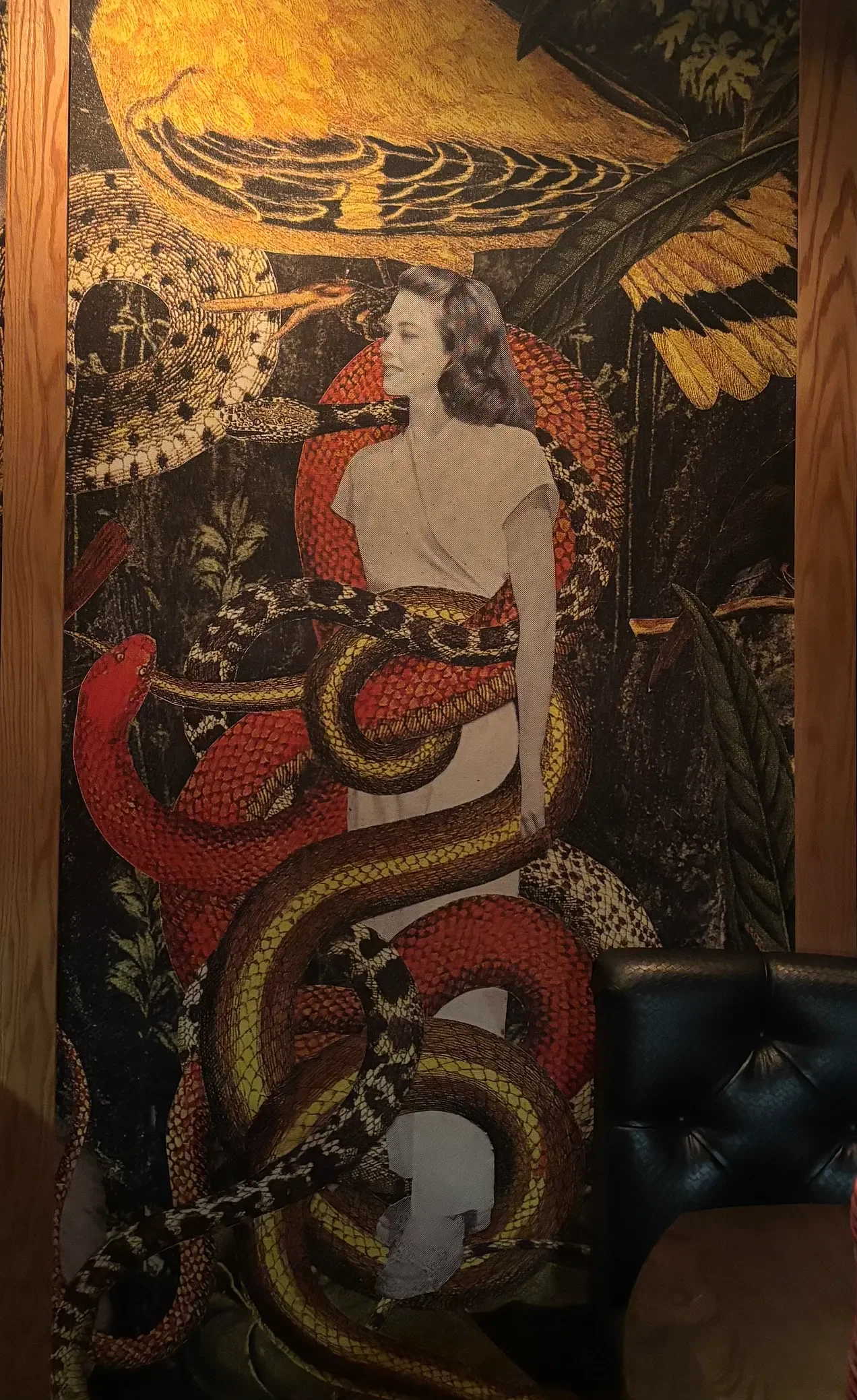
this is, I think, captures something like my medicine woman essence … image taken at Amazonia in Washington, DC
I was at a conference with this community of ministers this past September, and one of us led a workshop on making sacred objects. He told us a story about how, years after he had made his first prayer wheel (a sacred object that orients to the four directions), it had broken. He had been heartbroken, he said, because he had made it with a teacher that was dear to him. But this teacher had reminded him that when a sacred object breaks, that means that its prayer has been answered. I came back to my storage unit in California, days later, to find that the sacred dream weaving object that I had made on my vision quest had broken, too.